
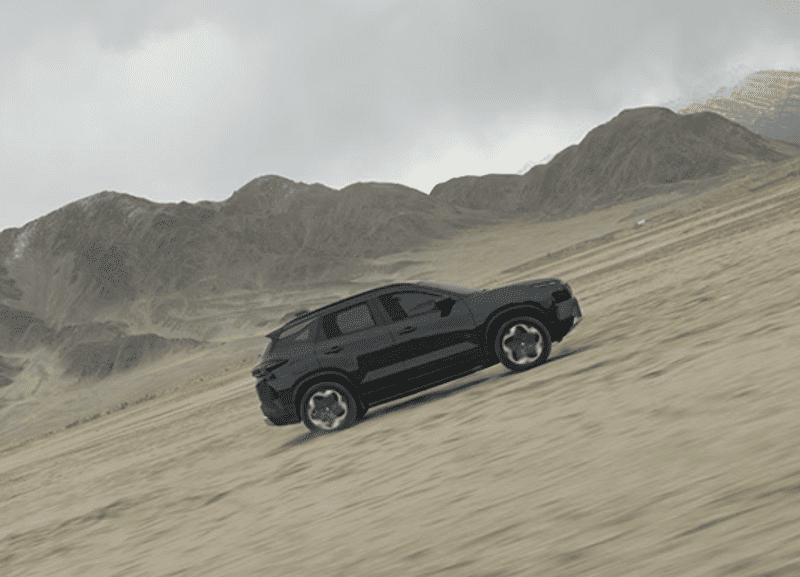
SUV buyers have long preferred petrol engines for their strong performance, familiar refueling process, and straightforward long-distance travel. However, electric SUVs are changing what buyers expect from modern cars. The Tata Harrier.ev is one such model, offering a large SUV body with electric performance and advanced features.
The bigger question is simple: can the Harrier.ev really replace a petrol SUV for everyday driving and road trips? The answer depends on how you drive, where you drive, and what you expect from your SUV.
What Makes the Harrier.ev Different?
There is also the option of either rear-wheel drive or quad-wheel drive models of the Harrier.ev. There are batteries of 65 kWh and 75 kWh in both versions of the vehicle, while the latter one offers a maximum MIDC range of 627 km in its RWD configuration and a 622 km MIDC range in the QWD version.
The quad-wheel drive version of the car features two motors and delivers torque of 504 Nm. According to Tata, the time from 0 to 100 km/h is 6.3 seconds. This ensures rapid acceleration without the need for a conventional petrol motor.
For those interested in fast-accelerating SUVs, there is quite a lot to like about the Harrier.ev.
How Does It Compare With a Petrol SUV?
A petrol SUV still has one major advantage: convenience. Refueling usually takes only a few minutes, and petrol stations are widely available.
An EV works differently. You need access to a charging point, especially if you regularly travel long distances. The Harrier.ev supports DC fast charging, with Tata’s technical specifications listing around 25 minutes for a 20% to 80% charge under test conditions using a 120 kW charger.
However, home charging can make daily driving quite convenient. You can plug the vehicle in overnight and start the next day with a charged battery. For people with regular city commutes, this can reduce the need for frequent visits to fuel stations.
What About Long-Distance Travel?
This is where your driving behavior matters.
The Harrier.ev’s range provides distinct advantages for long-distance travel. However, the range can differ occasionally based on speed, traffic, driving habits, weather, usage of air conditioning, and other factors. According to the manufacturer, Tata, certain conditions can affect performance.
A petrol SUV will provide you with more convenience when fuelling along the highway, as petrol stations are available anywhere. As for an electric vehicle, planning charging spots is a must.
Therefore, if your trips mainly occur inside the city, charging will not be a problem. However, if you enjoy driving in remote areas, charging can become a challenge.
Is the Harrier.ev practical for SUV buyers?
The Harrier.ev retains the dimensions and presence of a large SUV. Moreover, it offers features that are suitable for everyday use as well as some more difficult situations.
For instance, the QWD version has six different terrain modes and an off-road-focused configuration. In addition, there are other features available, for example, a 540-degree surround view.
Moreover, there is a lot of technology available in the interior of the car. Depending on the version of the car, you can get a 14.53-inch infotainment screen, a JBL 10-speaker audio system, and other comfort features.
That means you will not lose anything important due to your choice of electric drive.
What About Running Costs?
In general, electric vehicles have fewer parts when compared to their petrol counterparts. Engine oil does not require replacement, and the maintenance requirements might differ from those of a typical petrol SUV.
The cost of the charging process depends on the electricity rate and the location where it takes place. Charging at home is easier for frequent users, and public charging costs vary by provider.
Additionally, the Harrier.ev offers a lifetime battery warranty in case of first-owner private registrations, as per the conditions set by Tata. The warranty terms are different for later ownership.
This is helpful for customers who have concerns about battery ownership.
Can It Replace Your Petrol SUV?
For many urban SUV buyers, the Harrier.ev can be a practical replacement for a petrol SUV. Its range, performance, cabin technology, and charging options make it suitable for regular commuting and planned road trips.
However, it may not be the right fit for everyone. Buyers who frequently travel through areas with limited charging infrastructure may still prefer the convenience of a petrol SUV.
The decision ultimately comes down to your driving pattern. If you have home charging and mostly drive in cities or well-connected areas, an EV can fit naturally into your routine. For those who need quick refueling and often travel long distances without planning stops, a petrol SUV may remain more convenient.
Final Thoughts
The Tata Harrier.ev demonstrates how electric SUVs are going past the compact city car in terms of performance, battery size, range, and even four-wheel drive. The Harrier.ev possesses most of the attributes that one would expect from an SUV.
Still, replacing a petrol SUV is not only about range or performance. Charging access and driving habits matter just as much. For the right buyer, the Harrier.ev makes the switch to electric driving feel practical rather than restrictive.
If you’re considering an upgrade, JP Motors can help you explore your SUV options and understand which type of vehicle fits your everyday driving needs.