
The push for electric vehicles has had drivers thinking about one crucial element: driving range. Most consumers don’t want to know official stats; they want to know how far they can drive an electric car on a single charge under real-world driving conditions before buying one. And here is where knowing how things really perform becomes critical.
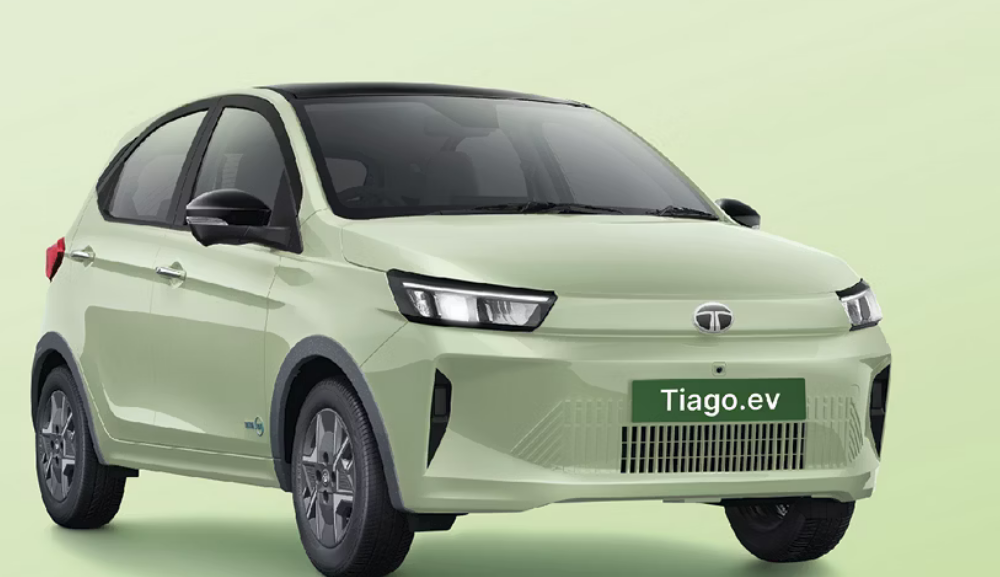
In this article, we take you through the Tata Tiago EV’s range, real-world mileage, battery choices, charging data, and essential features, so you have a fair idea of what this tiny electric hatchback has to offer in day-to-day driving.
Official Mileage And Real-World Mileage
Tata Tiago EV Range (Variant-wise Details)
| Tata Tiago EV Variant | Battery Capacity | ARAI Claimed Range | Real-World Range | Price | Waiting Period |
|---|---|---|---|---|---|
| Tata Tiago EV Smart 19 Medium Range | 19.2 kWh Battery | 226 km/charge | 180-200 km (Approx.) | ₹6.99 Lakh* | 2 Months |
| Tata Tiago EV Pure Plus 19 Medium Range | 19.2 kWh Battery | 226 km/charge | 180-200 km (Approx.) | ₹8.64 Lakh* | 2 Months |
| Tata Tiago EV Pure Plus 24 Long Range | 24 kWh Battery | 285 km/charge | 230-250 km (Approx.) | ₹9.64 Lakh* | 2 Months |
| Tata Tiago EV Creative Plus 24 Long Range | 24 kWh Battery | 285 km/charge | 230-250 km (Approx.) | ₹10.09 Lakh* | 2 Months |
Tata Tiago EV Range & Battery Specifications
| Specification | Details |
|---|---|
| Fuel Type | Electric (Battery) |
| Transmission | Automatic |
| Tata Tiago EV Range | 226 – 285 km/charge |
| Battery Capacity | 19.2 kWh – 24 kWh |
| Charging Time | 2.6 Hours (7.2 kW AC Charger, 10-100%) |
| Range Depends On | Driving Style, Traffic Conditions & Weather |
| Top Variant Range | 285 km/charge |
The Tata Tiago EV, like all electric cars, has a certified range that testers have measured under normal circumstances. These numbers are valuable for comparison, but are not always obtainable on a day-to-day drive.
In the real world, mileage is mainly based on:
- Traffic conditions in the city
- Highway speed
- Temperature and weather
- Use of air conditioners
- Weight of passenger and baggage
- Driving style: Road grade
In the city, where you constantly stop and regenerate, you may achieve higher efficiency than when cruising at high speed on the interstate. Typically, consistent acceleration and modest speeds will help optimize battery performance.
Instead, drivers should consider an average range they may anticipate in the actual world, rather than assuming they can hit the maximum promised range every time.
Battery Choices & Claimed Range
The Tata Tiago EV is offered with several battery options, and owners may pick as per their driving demands.
Key highlights are as follows:
- Several battery pack possibilities
- Automatic gearbox.
- System for regenerative braking
- Fast-charging compatibility
- Home charging support
- Several driving modes
- Compact hatchback style
What Will You Get on the Daily Driving Range?
Real-life driving provides a more practical message than lab tests. Most owners utilize it in a variety of settings, including city traffic, infrequent highways, and different weather. Higher speeds on roads increase the aerodynamic resistance and hence the battery drain. If you drive sensibly, you will usually get better mileage than if you drive recklessly.
With different battery variants, the average commuter who travels 30 to 50 km daily may only need to charge the vehicle once every few days.
Things That Impact Real-World EV Range
There are many common aspects that affect how effectively an electric vehicle’s battery is used.
- Driving Style: Quick acceleration and quick braking use up more energy. Smooth driving will enhance battery efficiency greatly.
- Velocity: Electric cars usually work well at modest speeds. The range is lower at high speeds for long periods.
- Weather: Extreme summer heat or winter temperatures may negatively influence battery performance and the electricity used for cabin cooling or heating.
- Air Conditioning Services: If you use the temperature control system all the time, it will use extra battery power and reduce your driving range a little.
- Traffic: In fact, heavy stop-and-go traffic may actually improve efficiency because regenerative braking captures energy when you slow down.
- Road Situation: On steep inclines, regenerative braking can recover power in the downhill sections. It’s one of the main benefits of current electric automobiles because you can charge them. The Tata Tiago EV offers plenty of charging options for varied lifestyles.
- Charging at Home: A regular home charger arrangement will enable owners to recharge the battery while they sleep. It’s the most convenient alternative for everyday commuters with dedicated parking.
- Quick Charge: Fast chargers are excellent for reducing charging time and are essential for lengthy trips or when a speedy recharge is needed.
- Public Charging Stations: With towns building up charging networks, electric car users can better access public charging.
Charging time is dependent on:
- Battery size
- Charger type
- Battery status
- Ambient temperature
Most owners generally charge at home, and use public fast chargers on road trips.
Highlights Of The Specifications
The Tata Tiago EV has practical proportions and features that make it easy to use every day.
Some of the key specifications are:
- Hatchback, 5-dr compact body
- Electric motor with automated gear box
- Braking system (regenerative)
- Different driving modes
- Digital controlboard
- Connected vehicle capabilities
- Touchscreen infotainment system
- Fast charging support
- Different battery choices
- Low cost of operation
Tips for Maximizing Range on Battery
The optimum range from an electric car frequently depends more on how you drive than just how big the battery is. And try not to brake suddenly, and keep your acceleration as smooth as possible, to help boost efficiency. When driving in the city you want to use regen braking properly to assist in recovering energy.
Maintaining tires at the proper pressure levels will increase rolling resistance and enhance overall efficiency. Routing with less congestion also helps to cut down on wasteful battery consumption.
Do not carry extra weight in the vehicle since more load means more energy usage. Smart use of air conditioning, instead of leaving it on full blast all the time, may also help save battery charge.
Also, charging the battery regularly, instead of letting it reach very low levels, can help your battery health over time. These basic procedures may help drivers get greater real-world mileage regularly and also prolong battery performance over time.
Summary
Multiple battery choices, the simplicity of home charging, regenerative braking, and rapid charging compatibility all add to its attractiveness.
With electric mobility becoming more popular, knowing what to anticipate in terms of practical range is becoming more crucial than just looking at the official stats. The Tata Tiago EV is a good partner for the contemporary city lifestyle, provided you practice reasonable driving habits and keep charging regularly.